Lance's Story
“I’d been seeing that particular doctor for probably five to 10 years and he never noticed anything drastic at all,” said Lance. “I’ve always been in shape and I didn’t have any history of heart problems, so it really threw me off.”
For about a year, everything seemed to go back to normal. But after returning home from a trip to Las Vegas, he was suddenly overcome with exhaustion and had to stay home from work the next day.
Recognizing something wasn’t right, Lance saw his doctor, who, upon hearing his symptoms, recommended he schedule an appointment with the heart specialists at Cedars-Sinai’s Smidt Heart Institute as soon as possible.
When Lance arrived at the Smidt Heart Institute, doctors discovered that his ejection fraction (the percentage of blood pumped out of the heart with each contraction) was less than 10% — a normal ejection fraction is about 55%.
Lance was scheduled to come back for additional testing several weeks later, but a few days before his follow-up appointment, Lance lost consciousness in the waiting room of his physician’s office. He was rushed to a nearby Cedars-Sinai affiliate, where he was told that his condition was critical.
Lance was diagnosed with dilated cardiomyopathy and his health began deteriorating rapidly. He dropped nearly 50 pounds — going from 210 down to 163 — in a matter of weeks.
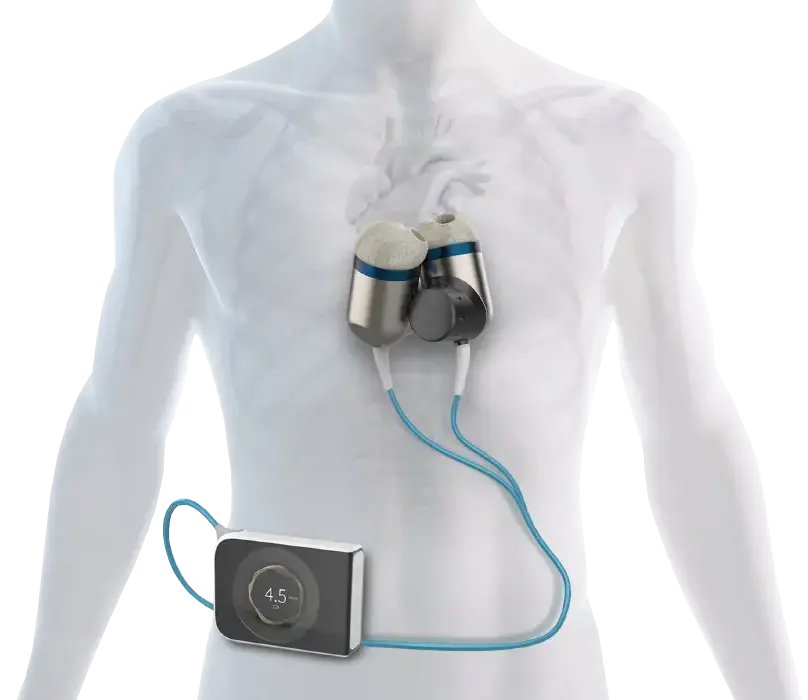
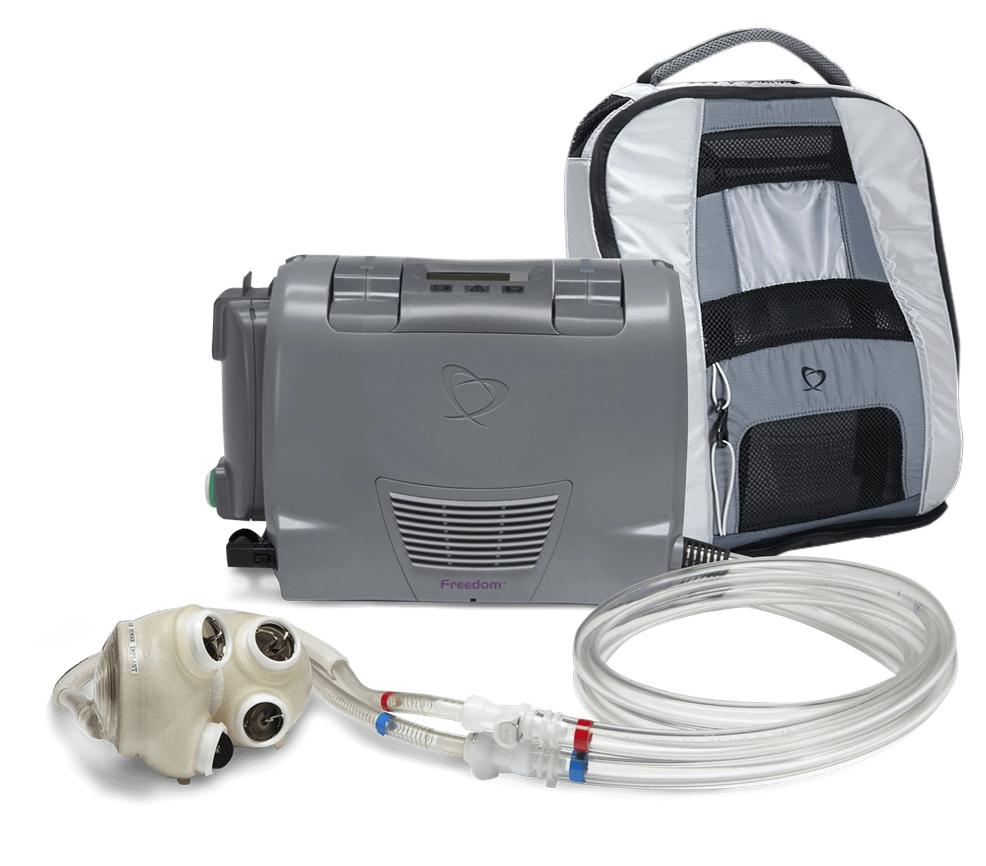
Lance was in desperate need of a heart transplant, but because of his size — he’s 6’3” — his doctors estimated it could take months for a big enough donor heart to become available. Because Lance wouldn’t survive the wait, his doctors approached him about using the SynCardia Total Artificial Heart to bridge him to a transplant.
While learning about the TAH for the first time came as a bit of a shock, it was actually Lance’s profession that helped him absorb the information and ultimately say yes to the surgery.
“My reaction was probably different from most people because I’ve been working in pharmaceuticals since 2001,” said Lance. “I wasn’t familiar with the [Total Artificial Heart], but I’d been in the medical industry long enough to know these things exist. I knew it was going to be a change, but I embraced it. The idea that your whole heart would be out was like, ‘wow,’ but I had faith in the medical community and knew Cedars-Sinai was top-notch.”
When Lance woke up after his implant surgery, one of the first things he noticed was the change in his energy level. “I don’t drink energy drinks, but that’s what I’d compare it to,” he said.
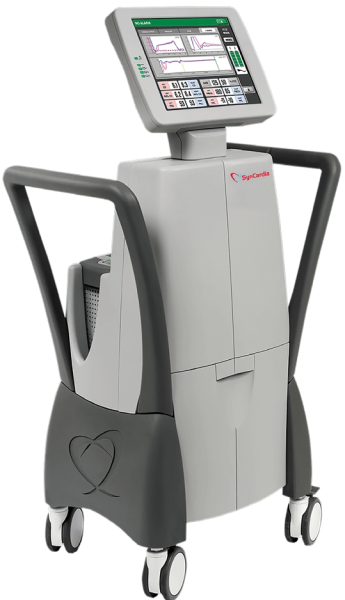
Within a few weeks, Lance’s condition had stabilized and he was switched to the Freedom® Driver. A few weeks after that, he was discharged from the hospital to wait for a matching donor heart at home with his family and friends.
As time went by, Lance began to regain his strength and some of the weight he had lost. Three months after his implant surgery, he was doing push-ups on a daily basis and had even started a new job.
“I could basically do everything, within reason,” Lance recalls. “I went to soccer games, the grocery store, and took the dog on walks in the neighborhood. I couldn’t stay out in the sun too much [to avoid a heat alarm], so sometimes at games I would have to go sit in the car for a little bit. But most of the time, I kept up my usual activities.”
A little more than two years after receiving the Total Artificial Heart, Lance got a call from the hospital that a potential donor heart had become available. He was prepared for surgery and even put under anesthesia; however, additional testing revealed that the donor heart wasn’t an ideal match and his doctors ended up calling off the procedure.
“When I came to, I could hear the [Total Artificial Heart], so that was bittersweet because I knew I hadn’t gotten the heart, but I was thinking, ‘Hey, it’s okay, I can go back in.’ The hardest part was telling my family. I mean, you stay positive as best you can. I’m not really a big person to cry, but I shed a tear. But then you move on.”
Unsurprisingly, when Lance got a second call about a potential match, he was excited but also cautious about getting his hopes up. Luckily, this time around, his doctors determined that the donor heart was the one they’d been waiting for.
Lance was able to go home about a week after his transplant surgery, which he largely attributes to the active and healthy lifestyle he was able to live with the Total Artificial Heart while he waited for his donor heart. “With the Total Artificial Heart, I was walking three miles a day. I was in shape, I just needed a heart.”
He remembers the moment he walked out of the hospital with his new heart: “I’m outside in a little courtyard, looking at the sky from inside the car, and feeling like, ‘Wow, I’m back in the world again.’ Everything just smells a little better, it’s all just a little bit different now. Because you become one with yourself and your body again. It was a great feeling.”
About a year after his transplant surgery, Lance had the opportunity to meet his donor’s family.
“There were a lot of tears all around, because there’s nothing you can say,” Lance remembers. “I probably held on to his mother harder than I’ve ever held on to anyone in my life, because she could hear the heart inside me.”
He continues, “The worst thing in the world is to outlive your kids. I was just trying to let them grieve and let them see that the heart was being taken care of. I’m doing my best to live a life that’s exemplary for him and his family. It was an incredibly humbling experience.”
Today, Lance spends as much time as he can trying to give back — in particular, by raising awareness and supporting other heart failure and transplant patients.
“It’s a life-changing experience, because you have this thing in your chest, but if you have someone to talk to who isn’t on the medical side, someone who’s been through the trenches and whose life is so much better for it, there’s nothing to compare to that.”