Slide

SynCardia Total
Artificial Heart

Pioneering the Future
of Heart Replacement

Clinical Confidence for Advanced Biventricular Heart Failure

SynCardia partners with transplant centers, surgeons, heart failure programs, perfusion teams, and hospital leadership to support the use of the SynCardia Total Artificial Heart (STAH) in appropriate patients. 

The STAH is FDA-approved in the United States as a bridge to transplantation for cardiac transplant-eligible candidates at risk of imminent death from biventricular failure. This page provides clinical resources related to patient selection, implantation, program readiness, education, and support.  

Why Physicians Choose SynCardia
Programs Managing Severe Biventricular Failure Require More Than a Device
They require a therapy pathway, training support, and operational partnership.
SynCardia supports clinicians with:
SynCardia Total Artificial Heart
What patients may be considered for the STAH?
Patients with end-stage biventricular heart failure who are not responding to medical therapy and are being evaluated for advanced heart failure interventions, including transplant.
Is the STAH used as destination therapy?
In the United States and Canada, the STAH is only used as a bridge to transplant in eligible patients.
What type of centers can implant the STAH?
Centers typically include advanced heart failure and transplant programs with mechanical circulatory support experience.
What training is required?
Hospitals must complete structured training and demonstrate capability in advanced cardiac surgical and ICU management.
Therapy Designed for Patients with Few Remaining Options

The SynCardia Total Artificial Heart is intended for carefully selected transplant-eligible patients with severe biventricular failure who may not be adequately served by isolated ventricular support strategies.

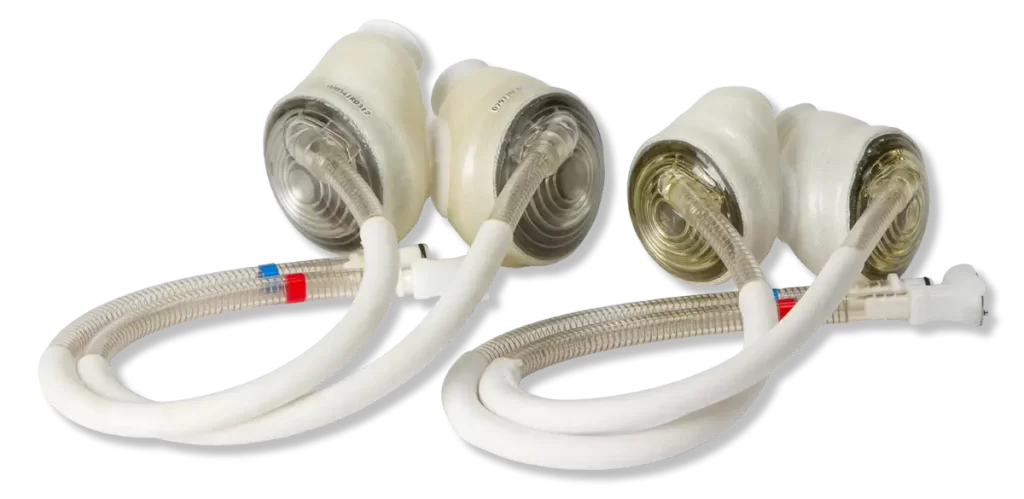
Two available sizes support broader anatomical fit considerations: 

SynCardia Total Artificial Heart

70cc STAH

SynCardia Total Artificial Heart

50cc STAH

  1. FDA Summary of Safety and Effectiveness
  2. Feldman D, Pamboukian SV, Teuteberg JJ, et al. The 2013 International Society for Heart and Lung Transplantation Guidelines for mechanical circulatory support: executive summary. J Heart Lung Transplant. 2013;32:157-87.
  3. Shah KB, Thanavaro KL, Tang DG, et al. Impact of INTERMACS profile on clinical outcomes for patients supported with the total artificial heart. J Card Fail 2016;22(11):913-919.
  4. Cook JA, Shah KB, Quader MA, et al. The total artificial heart. J Thorac Dis. 2015;7(12):2172–80.  
Selecting the Right Patient at the Right Time

Successful outcomes begin with appropriate patient selection and timely referral. Patients who may be considered—consistent with approved labeling and clinical judgment—can include those experiencing: 

Sizing Considerations

Chest fit assessment, including T10 measurement and imaging review, may assist in determining appropriate device size selection.

Clause: The SynCardia Total Artificial Heart is not CE marked and is not commercially available in the European Union. Access in Europe is available only under compassionate use or national derogation, on a patient-by-patient basis, subject to applicable national regulatory requirements.
Implantation with Familiar Principles, Specialized Expertise

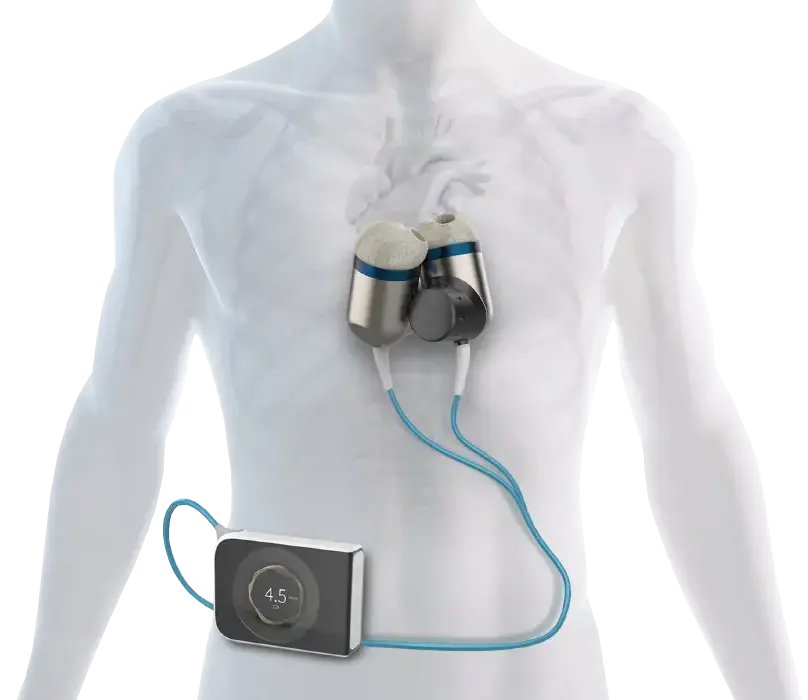
Similar to heart transplantation, implantation of the SynCardia Total Artificial Heart replaces both ventricles and all four native heart valves while preserving the atria and roots of the great vessels.  The procedure requires multidisciplinary planning and institutional readiness. 

Resources Include: 

A physician-focused video reviewing implantation principles, operative considerations, and post-operative support transitions. 

Important Safety Information

Please review complete Instructions for Use for full indications, contraindications, warnings, and precautions. These materials are intended for use by qualified healthcare professionals only. Proper training is required prior to use of SynCardia systems. Refer to institutional protocols and approved training programs before clinical use.

SynCardia Total Artificial Heart

70cc SynCardia Total Artificial Heart

● U.S. FDA: 2004
● Health Canada: 2005

SynCardia Total Artificial Heart

50cc SynCardia Total Artificial Heart

● U.S. FDA: 2020
● Health Canada: 2016

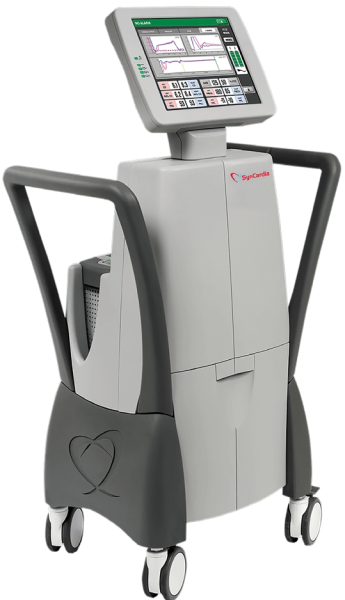
C2 Hospital Cart

Companion 2 Driver

● U.S. FDA: 2012
● Health Canada: 2013
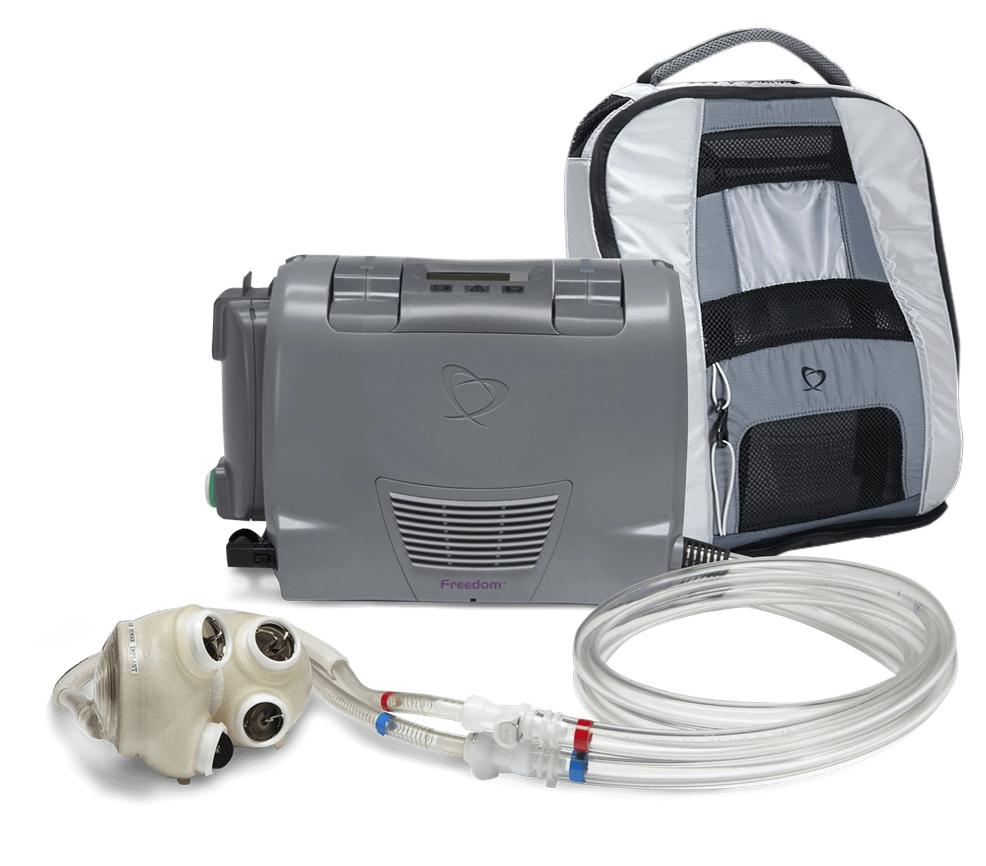
Freedom® Driver

● U.S. FDA: 2014
● Health Canada: 2011

Ongoing Learning for Advanced Heart Failure Teams

SynCardia provides education resources to help physicians and care teams build confidence in patient selection, implantation workflows, and program growth. Access live events, on-demand webinars, and practical training designed for centers at every stage of experience.

Ongoing Learning for Advanced Heart Failure Teams
Hospitals considering a total artificial heart program often require coordination across multiple departments. SynCardia can support planning discussions related to:

Whether launching a new program or strengthening an existing one, SynCardia works collaboratively with hospital stakeholders. 

Establishing a STAH program
Establishing a Total Artificial Heart program requires a highly coordinated, advanced heart failure and surgical infrastructure. SynCardia works alongside experienced cardiac teams to support program readiness across surgical, ICU, and multidisciplinary care pathways.
To help evaluate institutional readiness, we’ve developed a practical Hospital Readiness Checklist outlining the core clinical, operational, and programmatic capabilities associated with successful Total Artificial Heart centers.
Navigating Access Pathways
Coverage, coding, billing, and reimbursement considerations vary by geography, payer, site of care, and patient-specific factors. SynCardia can help connect hospitals with available resources and support conversations related to therapy access pathways.
Published Clinical Experience
Explore published literature related to total artificial heart therapy, patient selection, implantation, and outcomes.

Examples include: